
Choosing Your Wedding Party: Etiquette, Roles, and Practical Advice
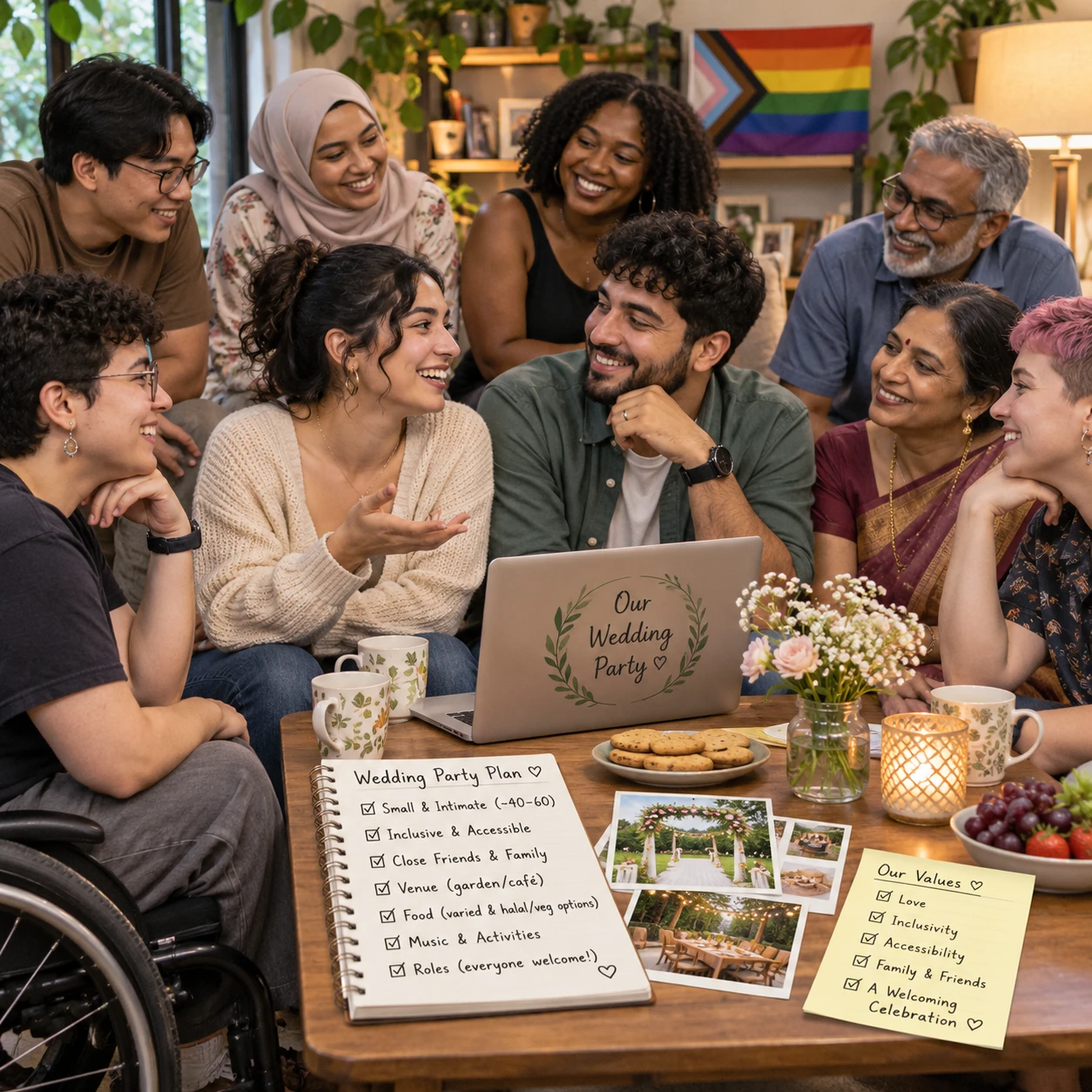
Choosing a wedding party can bring up big feelings alongside practical questions. You may be weighing family traditions, close friendships, budgets, travel plans, and how much help you actually need. There is no single correct lineup: thoughtful wedding etiquette means making choices that suit your relationships and celebration, then communicating them with care.
Understand what the wedding party does
A wedding party supports the couple before and during the celebration, with roles shaped by the people involved and the plans for the day. The titles are familiar, but the responsibilities are flexible; you can assign only the tasks that are useful to you.
A maid of honor or honor attendant and a best man may help with planning, offer a toast, keep track of key details, or provide support on the wedding day. Bridesmaids, groomsmen, and other attendants might join a rehearsal, get ready with the couple, walk in the ceremony, or help guests find their seats. Some couples ask attendants to take on several duties; others keep the role mostly ceremonial.
Discuss expectations rather than assuming everyone knows what their title involves. One person may enjoy organizing a gathering, while another can offer emotional support but has little time for extra planning. The couple remains responsible for decisions and vendor arrangements. A wedding party can help, but it should not become an unpaid planning team by default.
Choose people who fit your relationship and plans
Choose wedding party members based on trust, closeness, and a genuine willingness to take part, rather than obligation alone. The strongest choice is someone you want beside you and whose availability and comfort fit the role you have in mind.
Start by imagining the people you would want around you during a busy or emotional day. Consider how the relationship feels now, not only how long you have known each other. A longtime friend, sibling, cousin, or newer friend may all be a natural choice. There is no required ranking of family and friends.
It can help to separate the relationship from the role. You can love someone deeply without asking them to be an attendant, especially if the role would create stress or expense. You can also honor people in other ways, such as including them in a reading, asking them to greet guests, or spending time with them during the celebration. Avoid choosing someone mainly because you fear their reaction; a reluctant yes can strain a relationship more than an honest, kind conversation.
Decide on the size and composition
Your wedding party can be as small or large as suits your ceremony, budget, and relationships. It does not need to follow a traditional format, include a fixed number of people, or have equal numbers on each side.
Think about the practical shape of the day before setting a number. A small group may be easier to coordinate for a tight getting-ready space or a simple ceremony. A larger group can include more loved ones, but it may add costs for flowers, transportation, clothing coordination, meals, and schedule management. The couple does not have to cover every expense, but those costs should be discussed before anyone accepts.
Wedding party roles can also be mixed-gender. A woman can stand with the groom, a man with the bride, or attendants can be arranged without dividing the group by gender. Some couples use terms such as “attendants” or choose individual titles that feel comfortable. Likewise, different numbers of bridesmaids and groomsmen are fine. Attendants can walk in pairs, enter separately, or simply stand where the couple prefers.
Choose a structure that works in the room and feels right to you. Symmetry is optional; meaningful participation matters more than matching sides.
Navigate family expectations and sensitive choices
Handle family expectations by making the decision as a couple first, then sharing it calmly and consistently. Wedding etiquette can encourage consideration, but it does not require you to give every relative or longtime acquaintance a formal role.
Before announcing your choices, agree on the principle behind them. You might be keeping the wedding party small, including only people who can take on specific duties, or choosing close friends from different parts of your life. A shared explanation helps prevent one partner from being cast as the person who excluded someone.
If a relative asks why they were not included, acknowledge their feelings without suggesting the decision is still open. For example: “We care about you and are glad you’ll be there. We’ve decided to keep the wedding party small, but we’d love you to join us for the ceremony.” Offer another role only if you truly want to offer it; a substitute task can feel like a consolation prize.
Try not to announce the lineup publicly before speaking privately with anyone likely to be surprised. Keep the explanation brief and warm. You do not need to share a detailed comparison of relationships or disclose another person’s circumstances to justify your choice.
Consider practical commitments before asking
Before inviting someone into the wedding party, consider the time, travel, costs, and duties the role may involve. A personal request is more considerate when you can describe the likely commitment honestly, even if some details are not final.
Make a rough list of what you expect: attending a rehearsal, traveling to the venue, joining a pre-wedding gathering, wearing a chosen outfit, or helping with a specific task. Then review the wedding budget and schedule. If you expect attendants to pay for clothing, accommodation, or travel, say so before they agree. Avoid treating an expensive outfit, trip, or group event as an automatic part of the role.
- Time: Share the important dates and how many events you expect them to attend.
- Travel: Explain where the wedding and any related gatherings will take place.
- Cost: Be clear about likely personal expenses and any support the couple can offer.
- Tasks: Name specific duties instead of making a vague request to “help with everything.”
Be open to a no. Someone may care about you and still be unable to take on the cost, travel, or time. If they decline, thank them and keep the relationship separate from the decision.
Ask clearly and set expectations
Ask each person directly and personally, and explain what the role may involve before they commit. A thoughtful conversation is enough; elaborate proposal gifts or staged surprises are not required.
You might say: “I’d love you to be one of my attendants. We’re still confirming the schedule, but we expect a rehearsal the evening before and a simple outfit in a shared color range. Please take a few days to think about the time and cost before you answer.” This makes the invitation warm while leaving room for an honest response.
Share confirmed details in writing as plans develop, especially dates, travel information, clothing expectations, and any costs. If the plan changes, tell the group promptly. Clear communication prevents small assumptions from turning into resentment, and it gives attendants the chance to participate in a way that works for their circumstances.
Wedding party etiquette FAQs
Wedding party etiquette is flexible: there is no universal number, gender rule, or requirement to have attendants. These answers cover common planning questions.
How many people should be in a wedding party?
Choose as many people as you can include comfortably, whether that means none, one or two attendants, or a larger group. Consider the ceremony space, budget, and coordination involved rather than aiming for a customary number.
Do wedding parties need equal numbers on each side?
No. Couples can have different numbers of attendants on each side, arrange the procession in another way, or skip paired entrances. The ceremony should work for the people taking part.
Can I include friends of different genders?
Yes. You can include friends of any gender and choose titles, outfits, and procession arrangements that suit your group. Explain the plan to the wedding party so everyone knows what to expect.
How do I tell someone they aren’t in my wedding party?
If they ask, respond kindly and briefly. Explain your approach, such as keeping the group small, and let them know you value their presence. Avoid comparing them with people you chose or making promises you cannot keep.
Is it okay to have no wedding party?
Yes. A wedding can be complete without a formal wedding party. You can ask loved ones to take part in individual ways, or keep the ceremony focused on the couple.