Wedding Dress Trends: What’s Hot This Season
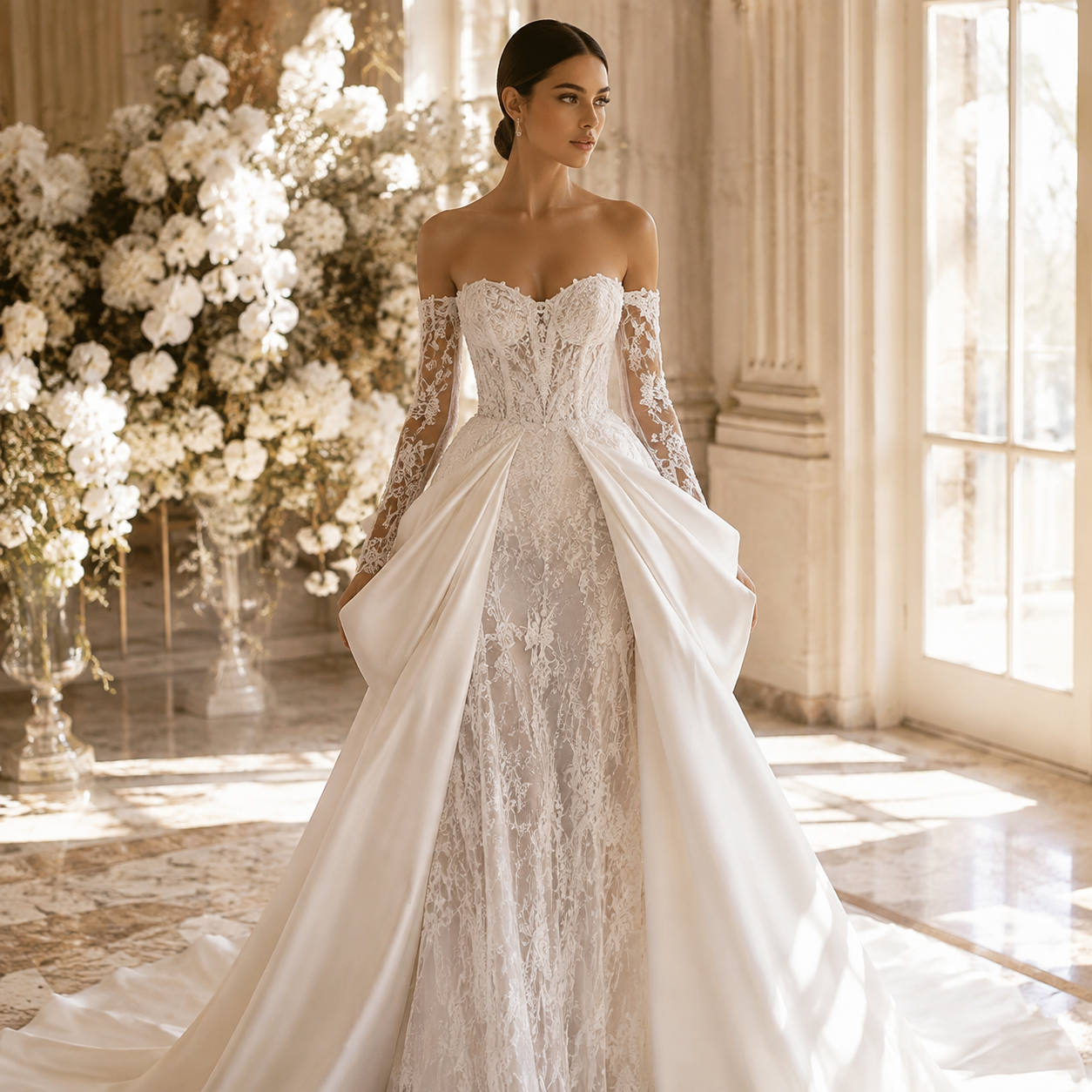
Today’s bridal fashion gives couples plenty of room to define what a wedding looks like. The strongest wedding dress trends this season combine clean lines with personal details: a soft overskirt over a fitted gown, embroidered flowers on minimalist satin, or statement sleeves that transform between ceremony and reception.
Use trends as a source of ideas rather than a checklist. The right bridal gown should suit your venue, season, movement, budget, and confidence as naturally as it suits your Pinterest board.
The Biggest Wedding Dress Trends This Season
The biggest wedding dress trends this season include versatile designs, expressive details, and silhouettes that balance fashion with comfort. Brides are choosing gowns that can evolve throughout the day while still feeling connected to the overall wedding vision.
Detachable overskirts or sleeves are especially useful for creating two distinct looks. A structured overskirt can add ceremony drama, then come off for dancing. Detachable sleeves offer coverage for a formal service or cooler weather without committing to a long-sleeved gown all evening.
Romantic texture remains prominent through lace and embroidery, floral appliqués, subtle three-dimensional details, and soft layers. At the other end of the spectrum, minimalist bridalwear uses smooth satin, crepe, or mikado fabric to create a refined look with very little decoration.
Another important direction is personalization. A simple gown may gain character through a dramatic veil, colored shoes, heirloom jewelry, a removable bow, or a custom monogram inside the lining. This approach helps a bride wear a current trend without losing her individual style.
Modern Silhouettes Brides Are Choosing
The best wedding dress silhouette depends on the shape you want to create, how you want to move, and the setting of your celebration. A-line, ball gown, sheath, and mermaid dresses each produce a different visual effect, so trying several cuts is more useful than choosing from photographs alone.
A-line and ball gown
An A-line dress gradually widens from the waist and works across many body types, venues, and levels of formality. It offers room to walk and sit while creating a classic bridal outline. Chiffon gives it a light, flowing quality, while satin or mikado makes the shape more architectural.
A ball gown has a fuller skirt and creates maximum ceremony presence. It suits grand interiors, historic venues, and formal evening weddings particularly well. The trade-off is volume: a large skirt may require more space at the ceremony, reception tables, and dance floor.
Sheath and mermaid
A sheath dress follows the body with a relatively narrow line, making it a natural choice for city weddings, destination celebrations, and brides who prefer understated elegance. Lightweight crepe or silk can make the style comfortable, though fabric and fit matter greatly for movement.
A mermaid dress fits through the bodice and hips before flaring near the knee or lower. It creates a sculpted, dramatic effect, but the close fit can limit stride length. Walk, sit, and practice climbing a step during the fitting before deciding.
When comparing silhouettes, ask three practical questions: Can I move comfortably? Does the shape suit the venue? Will I still like the proportions when photographed from the front, side, and back?
Fabrics, Textures, and Details to Watch
Lace, satin, chiffon, embroidery, bows, and floral appliqués are shaping this season’s bridal look. The fabric determines how a gown photographs, moves, feels against the skin, and fits the atmosphere of the wedding.
Lace can create anything from vintage romance to modern botanical detail. Fine lace over a simple lining feels delicate, while bold graphic lace can make a fitted gown more fashion-forward. Embroidery adds visual interest without necessarily increasing the gown’s overall volume, especially when used along the neckline, waist, or train.
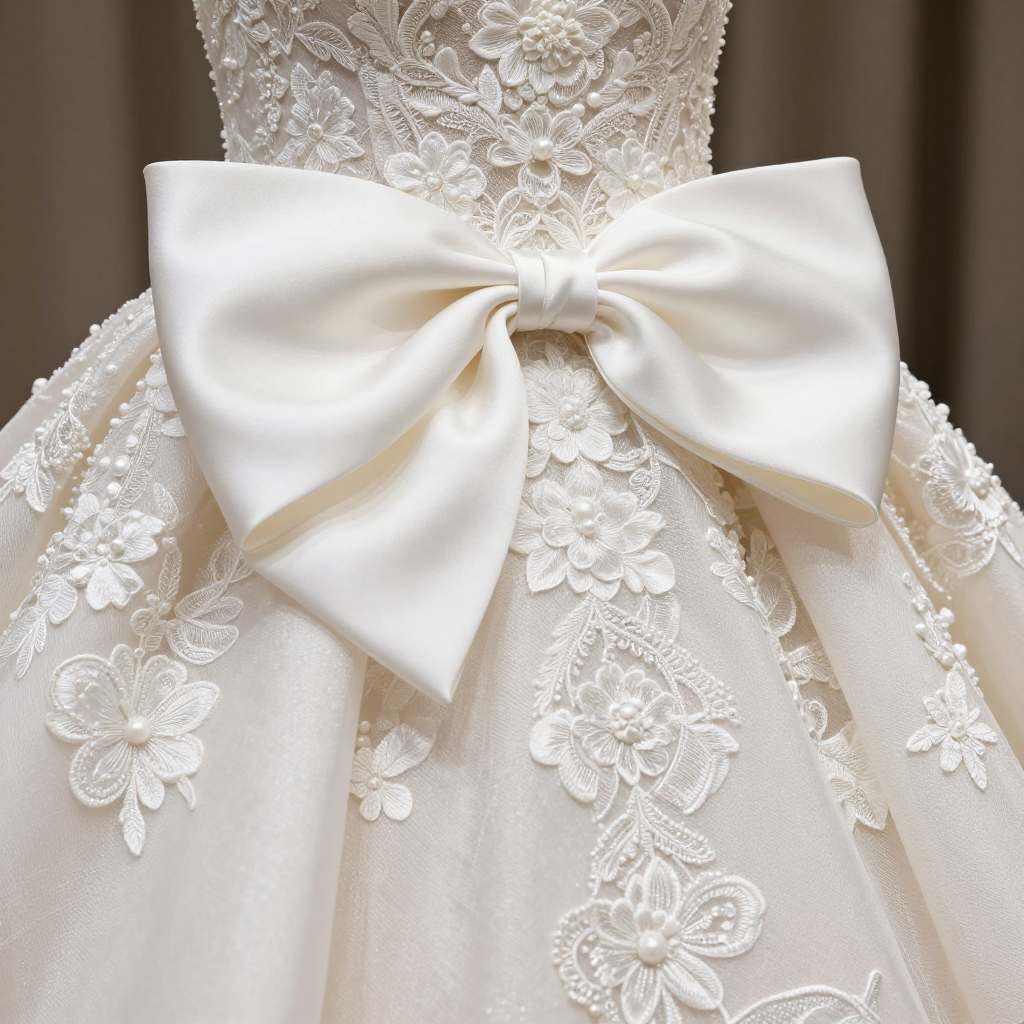
Satin and mikado offer a smooth, polished surface that suits minimalist bridalwear and formal celebrations. They hold sculptural shapes well, including pleats, draping, and oversized bows. Their sleek finish can show creasing or fit issues more clearly, so careful alterations are essential.
Chiffon and other light fabrics create movement for outdoor ceremonies, warm-weather weddings, and relaxed receptions. They may need additional lining or support depending on the design. Floral appliqués bring a garden-inspired feeling, while a single oversized bow can make a clean gown feel playful and contemporary.
Think of detail placement as visual direction. Decoration at the shoulders draws attention upward; embroidery at the waist defines the center of the outfit; a decorated train creates impact when walking down the aisle but may matter less once the reception begins.
Statement Sleeves, Necklines, and Back Details
Statement sleeves, distinctive necklines, and memorable back details can define a bridal gown even when the silhouette remains simple. These features also offer practical ways to adapt coverage, formality, and visual balance.
Statement sleeves range from sheer bishop sleeves and fitted lace sleeves to detachable puff sleeves and slim off-the-shoulder bands. Voluminous sleeves suit romantic or editorial styling, while fitted sleeves create a more polished line. Consider how sleeves interact with your bouquet, jewelry, and hairstyle; crowded details can compete for attention.
Necklines shape the first impression of a dress. A square neckline feels structured and modern, a sweetheart neckline adds traditional softness, and a high neckline can look elegant with a sleek updo. A bateau neckline offers coverage while framing the collarbone, making it useful for formal or minimalist designs.
Back details create impact during the ceremony and photographs. An open back can be balanced with a higher front, while buttons, lace panels, illusion tulle, or embroidery add detail without changing the whole gown. Always check the back while seated and walking, particularly if the design includes a low opening or delicate fastening.
Accessories should support these features. Choose a veil length that does not hide an important back detail, and avoid a necklace if the neckline already provides a strong focal point. Earrings, hair accessories, gloves, and shoes can complete the look without overwhelming it.
Minimalist, Romantic, and Alternative Bridal Styles
Minimalist, romantic, and alternative bridal styles are all current choices; the difference lies in the mood, texture, and level of tradition. Each style can be adapted to a formal ballroom wedding, an outdoor ceremony, or an intimate city celebration.
Minimalist bridalwear relies on proportion, fabric, and fit rather than heavy embellishment. A bias-cut sheath, clean A-line dress, or structured column gown can feel contemporary and timeless at once. The limitation is that simplicity leaves little to hide: seams, undergarments, and alterations need to be exceptionally well resolved.
Romantic gowns use lace, tulle, embroidery, floral appliqués, soft gathers, and flowing trains. They work beautifully with garden venues, historic settings, and spring or summer celebrations. To keep the result modern, combine one abundant feature, such as a layered skirt, with cleaner accessories.
Alternative options include bridal separates, jumpsuits, short dresses, colored gowns, and two-piece combinations. Separates can improve flexibility and may allow a bride to reuse a skirt or top after the wedding. A short dress suits a courthouse ceremony, second look, or lively reception, though it may require different footwear and styling from a traditional gown.
How to Choose a Trend That Feels Like You
Choose a wedding dress trend by filtering it through venue, season, movement, theme, comfort, and personal style. A useful test is the “three-scene rule”: imagine the dress during the ceremony, while greeting guests, and on the dance floor.
- Venue: Match scale and fabric to the setting. A ball gown may suit a grand hall, while a lightweight sheath or A-line dress may feel more natural at a garden or beach venue.
- Season: Sleeves, lining, and fabric weight matter. Consider indoor heating, outdoor temperatures, and whether the ceremony and reception use different spaces.
- Movement: Test stairs, sitting, walking, hugging, and dancing. A beautiful gown that restricts basic movement will affect the entire day.
- Theme: Use details to connect the gown with the wider design. Botanical embroidery can echo floral arrangements; clean satin can complement a modern tablescape.
- Personal style: Keep one familiar element. It might be a simple neckline, a dramatic train, a vintage lace texture, or a favorite accessory.
Choosing a trend for its visual appeal means accepting that some features may need modification. A deep back can require specific undergarments, a long train needs bustling, and heavy embellishment may add weight. Discuss these compromises early with your bridal consultant and wedding planning team.
Planning Your Wedding Dress Shopping Experience
Plan wedding dress shopping by setting priorities, booking focused appointments, and leaving enough time for production and alterations. Starting early gives you more choice and reduces pressure, especially if the gown includes custom details or detachable pieces.
Before the appointment
Decide which matters most: silhouette, neckline, fabric, coverage, budget, or versatility. Bring venue information and, if available, photographs of your ceremony space. Wear simple undergarments and shoes with a similar height to the pair you may wear on the wedding day.
Keep the group small enough for useful feedback. Too many opinions can make a fitting feel like a vote rather than a personal decision. Take notes after each appointment, including comfort, movement, estimated alterations, and which details you genuinely liked.
Build in alteration time
Ask the boutique about ordering timelines, fitting milestones, bustle design, and final pressing. Many brides benefit from allowing several months between ordering and the wedding, with the final fitting scheduled close enough to reflect normal body changes without creating a last-minute rush.
Budget beyond the listed gown price. Alterations, steaming, undergarments, shoes, veils, jewelry, hair accessories, and preservation can all affect the final cost. A less embellished dress with carefully chosen bridal accessories may deliver more versatility than an elaborate gown that requires additional styling.
Share the dress direction with your planner or stylist once you have a clear idea. Coordinating the bridal gown with the bouquet scale, ceremony backdrop, photography plan, and reception layout helps the fashion feel integrated rather than separate from the wedding design.
Wedding Dress Trends FAQ
Which wedding dress styles are trending this season?
Popular directions include A-line and sculpted silhouettes, minimalist bridalwear, lace and embroidery, statement sleeves, detachable overskirts, dramatic bows, and personalized back details. The most useful trend is the one that supports your comfort and wedding setting.
How do I choose a wedding dress silhouette?
Try several silhouettes and compare how they affect movement, proportions, comfort, and photographs. Consider A-line for versatility, ball gown for volume, sheath for a clean line, and mermaid for a fitted, dramatic shape.
Are minimalist wedding dresses still popular?
Yes. Minimalist wedding dresses remain a strong choice because fabric, tailoring, and accessories can create a polished look without heavy decoration. They also provide a flexible foundation for dramatic veils, jewelry, sleeves, or bows.
When should I start shopping for my wedding dress?
Begin shopping early enough to compare options and allow time for ordering and alterations. Your bridal boutique can recommend a timeline based on the designer, gown construction, custom work, and wedding date.
How can I personalize a trendy wedding dress?
Personalize it with detachable sleeves, a removable overskirt, embroidery, a meaningful veil, heirloom jewelry, colored shoes, a custom bow, or carefully chosen bridal accessories. Small changes often make a current design feel distinctly yours.