Creative Wedding Invitations: Ideas to Wow Your Guests
Your wedding invitation is often the first tangible glimpse guests receive of your celebration. The right wedding invitation design can introduce the venue, mood, color palette, and personality of the couple long before the ceremony begins.
Creative does not have to mean complicated or expensive. A thoughtful invitation combines visual appeal with clear information, practical mailing choices, and a guest experience that feels unmistakably yours.
Start With Your Wedding Style and Story
Your wedding style and story should determine the invitation concept. Use the venue, season, level of formality, cultural traditions, and shared personality to guide the design before choosing paper or printing techniques.
A coastal wedding might use soft blue ink, shell-inspired artwork, and a relaxed invitation wording style. A formal ballroom celebration may call for classic typography, restrained embellishment, and traditional phrasing. For a countryside wedding, botanical illustrations, deckled edges, or warm earth tones can connect the stationery to the surroundings.
Begin with three decisions:
- Atmosphere: Should guests expect an elegant, relaxed, festive, romantic, or modern event?
- Visual language: Which colors, textures, symbols, and typefaces already appear in your wedding theme?
- Guest needs: What information, language options, accessibility considerations, and travel details will make planning easier?
Season matters, too. Spring may suit watercolor florals, while an autumn wedding could use illustrated foliage and deep jewel tones. Cultural traditions can influence motifs, ceremony details, language, and invitation wording. A wedding planner or stationery designer can help turn these ideas into one coherent direction rather than a collection of attractive but unrelated features.
Creative Wedding Invitation Formats to Consider
Creative wedding invitation formats make the first impression memorable while organizing information in a useful way. Choose the structure according to your wedding theme, guest list, mailing method, and the amount of detail guests need.
A traditional flat card remains versatile, but distinctive formats can create a stronger sense of occasion:
- Folded invitation: A bi-fold or tri-fold design creates space for ceremony details, a personal note, or a small illustrated timeline.
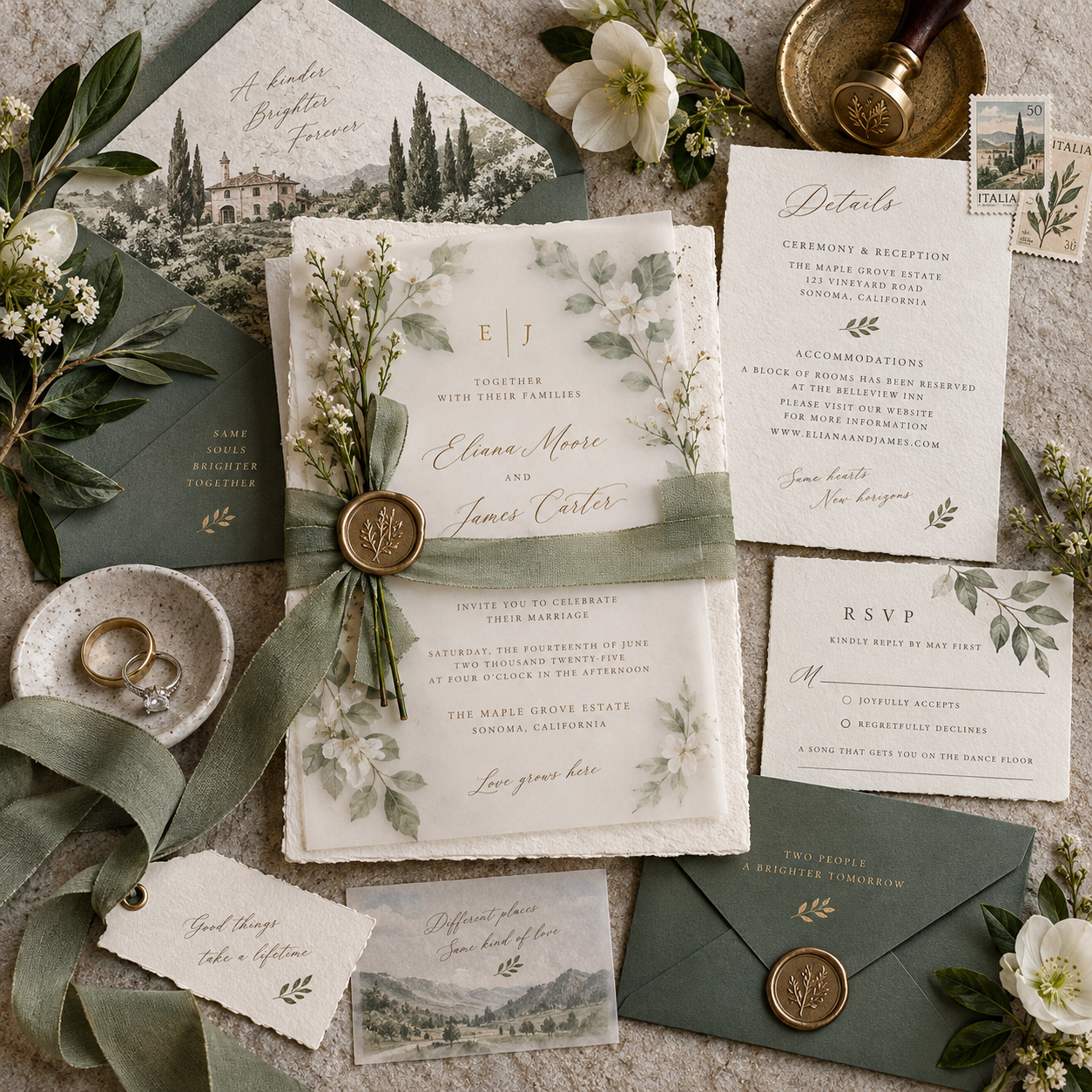
- Layered invitation suite: Mount the main invitation on a backing card and add RSVP cards, details cards, or maps in complementary sizes.
- Gatefold design: Two panels open to reveal the invitation, making the unveiling itself part of the guest experience.
- Illustrated card: A custom venue drawing, city map, family crest, or seasonal scene can give the stationery a distinctive story.
- Vellum overlay: Translucent vellum placed over the main card adds depth while allowing the artwork or typography to remain visible.
- Digital wedding invitations: Email-based or website-linked invitations can support quick updates, online RSVPs, and reduced paper use.
Elaborate construction has a practical cost. Thick layers may require extra postage, vellum can be harder to read in low contrast, and unusual shapes may not pass smoothly through standard mailing equipment. Digital invitations are efficient, but some guests may prefer a physical keepsake or may have limited comfort with online tools. A hybrid approach can work well: send printed invitations to guests who value tradition and use a digital platform for updates, travel information, or reminders.
Design Details That Make Invitations Memorable
Memorable invitation design comes from a few intentional details rather than adding every available embellishment. Typography, color, illustration, photography, patterns, monograms, wax seals, ribbons, and custom artwork should support the same wedding story.
Build a recognizable visual system
Choose one primary typeface for names or headings and a highly readable companion font for essential details. Script fonts can look beautiful, but they should not carry small text, dates, addresses, or RSVP instructions. Strong contrast between text and background also improves accessibility.
A color palette of two or three core shades usually feels more coordinated than a page filled with competing colors. For example, charcoal, ivory, and muted sage can create a refined garden look, while terracotta, blush, and cream may suit a warm outdoor celebration.
Add one meaningful signature element
A venue illustration can anchor the suite. A monogram may combine initials with a meaningful symbol. A custom pattern could reference a family textile, local architecture, or the landscape around the ceremony. Couples who love photography might use a subtle engagement image on a details card rather than crowding the main invitation.
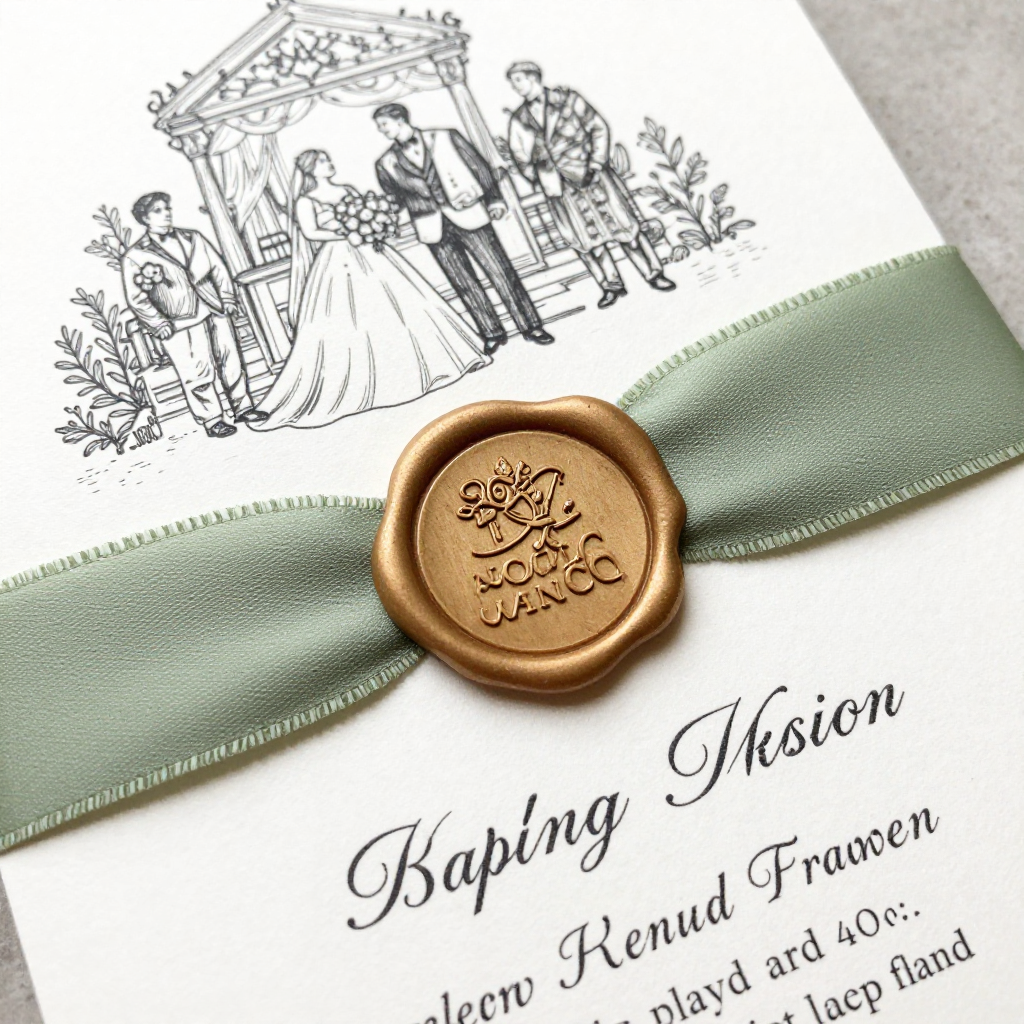
Wax seals and ribbons add tactile appeal, but they can complicate assembly and mailing. Use them on an outer envelope or invitation band when you want the detail to feel special without making every card difficult to handle.
Unique Materials and Printing Ideas
Paper and printing techniques change how a wedding invitation looks and feels. Match the material to your budget, wedding formality, readability needs, and the realities of mailing.
- Textured paper: Cotton, linen, laid, and handmade-style stocks add dimension and work especially well for romantic or formal themes.
- Recycled stock: Recycled paper can support an eco-conscious wedding while offering a natural, lightly flecked appearance.
- Letterpress: Pressed ink creates a tactile impression and a refined finish, although the process may limit certain colors or increase production complexity.
- Foil accents: Gold, silver, copper, or colored foil can highlight names, borders, or small motifs. Used sparingly, foil feels polished rather than overpowering.
- Embossing: Raised or recessed details work well for monograms, botanical forms, and borders.
- Die-cut shapes: Arch, scallop, ticket, or custom silhouettes can reinforce the wedding theme, but unusual shapes may need special envelopes or postage.
Choosing luxury paper for texture means accepting greater weight and possible mailing costs. Choosing recycled stock may produce natural variation between sheets. Digital printing often offers flexibility for detailed artwork and smaller quantities, while letterpress and foil can create stronger tactile impact. Request samples before committing, because colors and textures can appear very different on a screen.
Personalize the Full Invitation Suite
A cohesive invitation suite connects every paper element through shared colors, typography, illustrations, and wording. Treat the suite as a small information system, with each piece answering a different guest question.
- Main invitation: Present the couple’s names, wedding date, ceremony time, venue, and location.
- RSVP card: Collect attendance responses, meal preferences, and any other information needed for planning.
- Details card: Share accommodation options, transportation, parking, weekend events, and deadline reminders.
- Map: Illustrate the venue area, especially when guests will travel between ceremony and reception locations.
- Menu preview: Include this only when it helps guests understand meal choices or dietary planning.
- Wedding website information: Direct guests to a site for travel updates, registry details, FAQs, and schedule changes.
Not every guest needs every insert. A local, simple wedding may need only the invitation and online RSVP instructions, while a destination wedding may require accommodation, transportation, and itinerary information. Grouping details thoughtfully keeps the invitation suite elegant and reduces paper waste.
Wedding planning services can help coordinate stationery with the venue, caterer, transportation provider, and guest communication schedule. That coordination prevents common problems, such as printing a ceremony time before the venue confirms it or publishing hotel information that later changes.
Essential Wording, Information, and Etiquette
Creative invitation wording must still give guests every detail they need to attend confidently. Include the names, date, time, venue, location, dress code, RSVP instructions, and relevant accommodation or gift information in a clear hierarchy.
At minimum, guests should be able to answer these questions:
- Who is getting married?
- When and where is the ceremony taking place?
- Are the ceremony and reception at different venues?
- What should guests wear?
- How and by what date should they RSVP?
- Where can they find travel, accommodation, accessibility, dietary, and gift details?
The invitation wording should match the level of formality. Traditional wording may use the hosts’ names and a formal request line, while a modern celebration may use warm, conversational language. If parents or families are hosting, reflect that accurately. If the ceremony is adults-only, explain the arrangement through the addressed invitation and wedding website rather than placing an awkward statement on the main card.
Use inclusive language and provide translations when guests speak different languages. Check names, accents, honorifics, venue spelling, map labels, and web addresses carefully. A beautiful suite with an incorrect date creates more stress than any design detail can solve.
Plan, Proof, and Send Invitations With Confidence
To send creative wedding invitations confidently, set a budget, order samples, proof every detail, and build mailing time into the wedding planning timeline. The process should protect both the guest experience and the rest of the wedding budget.
- Set the stationery budget: Include design, printing, envelopes, RSVP cards, inserts, postage, addressing, assembly, and a small quantity of extras.
- Create the guest-data system: Keep names, addresses, household groupings, meal requirements, and RSVP status in one carefully maintained list.
- Order physical samples: Review paper weight, color, legibility, envelope fit, embellishments, and how the suite feels in hand.
- Confirm the wording: Have the couple, planner, venue, and relevant family members review the final information before production.
- Check the proof line by line: Verify dates, times, addresses, postal codes, names, punctuation, RSVP deadlines, and website links.
- Test mailing requirements: Take a completed envelope to the postal service if the suite is thick, rigid, oversized, or unusually shaped.
- Assemble and send early enough: Allow time for addressing, postage, delivery, response collection, and follow-up with guests who miss the RSVP deadline.
Exact invitation timing depends on the wedding location, guest travel, season, and whether save-the-dates were sent. Destination celebrations and holiday weekends usually benefit from earlier communication. Your planner can map stationery milestones against venue confirmation, menu decisions, hotel blocks, and the final guest count.
Common mistakes include ordering only the exact number of invitations, choosing low-contrast text for style, and adding decorative layers without checking postage. Keep a few extra suites for keepsakes, late address changes, and unexpected additions. Creative design works best when it remains easy to open, read, respond to, and remember.
Frequently Asked Questions
What information should creative wedding invitations include?
Include the couple’s names, wedding date, ceremony time, venue, location, dress code, RSVP method and deadline, and a clear path to accommodation, transportation, accessibility, dietary, gift, and wedding website information.
When should wedding invitations be sent?
Send invitations according to your wedding planning timeline and guest travel needs. Destination weddings, international guests, and holiday dates generally require earlier communication than a local celebration.
Are creative wedding invitations suitable for formal weddings?
Yes. A formal invitation can be creative through refined typography, a custom monogram, subtle foil, engraved-style artwork, or a distinctive paper texture while preserving traditional wording and clear structure.
How can couples personalize invitations without overspending?
Choose one high-impact feature, such as a venue illustration, custom monogram, colored envelope, or meaningful pattern. Use standard sizes and keep the invitation suite simple to control production and mailing costs.
Are digital wedding invitations appropriate for every guest list?
Digital wedding invitations suit guests who are comfortable online and make updates and RSVP tracking easier. A printed or hybrid option may be more considerate for older relatives, guests with limited internet access, or anyone who values a physical keepsake.