Wedding Photography Tips: How to Capture Every Moment
Wedding photographs help you revisit the people, emotions, and small details that made your day yours. Thoughtful planning gives your wedding photographer the context and time to document those moments, while leaving enough room for the day to unfold naturally.
You cannot plan a photograph for every second, and trying to do so can make the schedule feel like a production. Instead, decide what matters most, build a flexible timeline, and coordinate with your photographer and wedding planner so the important moments have space to happen.
Start with the couple’s priorities
Start by telling your wedding photographer which people, traditions, and moments matter most to you. A short conversation about your priorities helps shape coverage around your story rather than a generic checklist.
Each couple has different non-negotiables. You may want a quiet first look with a parent, a cultural ceremony tradition, a portrait with a relative who cannot stay for the reception, or a photograph of friends who traveled a long way. Share the names and context, especially when a moment may be easy to miss or a person may be unfamiliar to the photographer.
Try a simple three-part priority check:
- People: Who must appear in formal portraits or candid coverage?
- Moments: Which traditions, exchanges, or reactions would you be disappointed to miss?
- Details: Which objects or design choices carry personal meaning?
Rank each item as essential, preferred, or optional. This gives your photographer room to make quick decisions if the ceremony runs late. It also keeps the shot list focused on what you will value later, rather than every pose you have seen online.
Build a realistic wedding photography timeline
A realistic wedding-day timeline sets aside time for getting ready, travel, portraits, the ceremony, and reception coverage, with buffers between major events. Share the draft with your photographer and planner so they can flag tight transitions before the day.
Work backward from fixed events, such as the ceremony start, venue access limits, and sunset. Then account for how long each transition actually takes: gathering family members, walking between photo locations, touching up hair and makeup, or moving guests from the ceremony to the reception. A short drive can still need extra time for parking and walking.
Ask your photographer how much time they recommend for couple portraits and family portraits at your venue. The answer depends on the number of groupings, location distance, and whether you plan a first look. Add a modest buffer after travel and before key events; a schedule with no breathing room can turn a small delay into a rushed portrait session.
Plan for unscripted moments, too. A wedding photographer may need a few minutes to document a greeting or a spontaneous toast. Keep the timeline clear enough to guide the day, but flexible enough to let meaningful interactions happen without stopping the celebration.
Create a must-have shot list
A useful wedding photography shot list names priority people, moments, and details while leaving creative choices to the photographer. Keep it brief, specific, and organized by the parts of the day.
Use the list to prevent omissions, not to direct every frame. Share it in advance and identify people by name or relationship; “Grandma June” is more helpful than “grandmother” when several relatives are present. For family portraits, assign a trusted person who knows both sides of the family to help gather groups.
- Getting ready: attire, meaningful accessories, final preparations, and a few natural interactions.
- Ceremony: the processional, key traditions, vows or exchange of rings, the couple’s reactions, and the recessional.
- Family and couple portraits: requested groupings, immediate family, wedding party, and relaxed portraits together.
- Reception: entrance, speeches, first dance, important traditions, guest interactions, and the planned send-off if applicable.
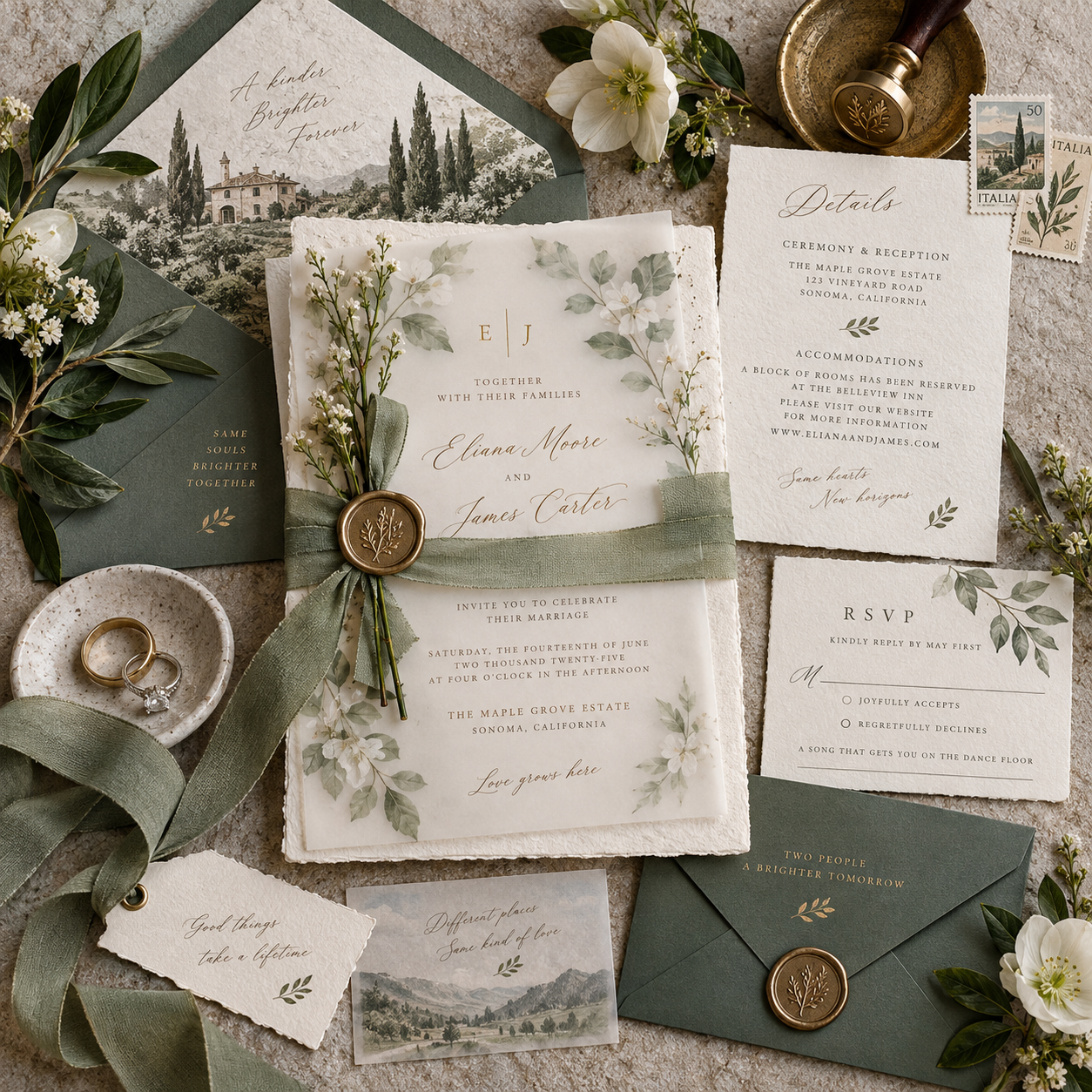
- Wedding details: invitations, flowers, rings, table settings, place cards, and personal keepsakes.
Tell your photographer if a detail is handmade, borrowed, or tied to a family story. They can then prioritize it without needing a long explanation during a busy moment. Keep the list to genuine must-haves; an exhaustive checklist can pull attention away from candid moments and create unnecessary pressure.
Make the most of light and locations
Good wedding photos depend on thoughtful use of available light and practical photo locations. Ask your photographer to review the venue in advance and recommend places that fit your schedule, comfort, and desired look.
Natural light can create soft, flattering portraits outdoors or near a large window, but it changes throughout the day. Direct midday sun may create strong shadows, while evening light can be softer and warmer. Your photographer can adapt to the conditions; you do not need to choose a venue or schedule around a single ideal lighting moment.
Choose locations with logistics in mind. A beautiful garden may be a poor choice if it requires a long walk in formal shoes or leaves too little time before the ceremony. Consider shade, indoor alternatives, accessibility, privacy, and how far the location sits from the reception. If you have several meaningful spots, ask which can be combined without turning portraits into a tour.
For indoor ceremonies or receptions, share any venue rules about flash, movement, or restricted areas. Low light and changing conditions are common, so discuss the photographer’s approach and backup options beforehand. A workable location with enough time often serves you better than a dramatic backdrop that makes the schedule fragile.
Capture candid moments without disrupting the day
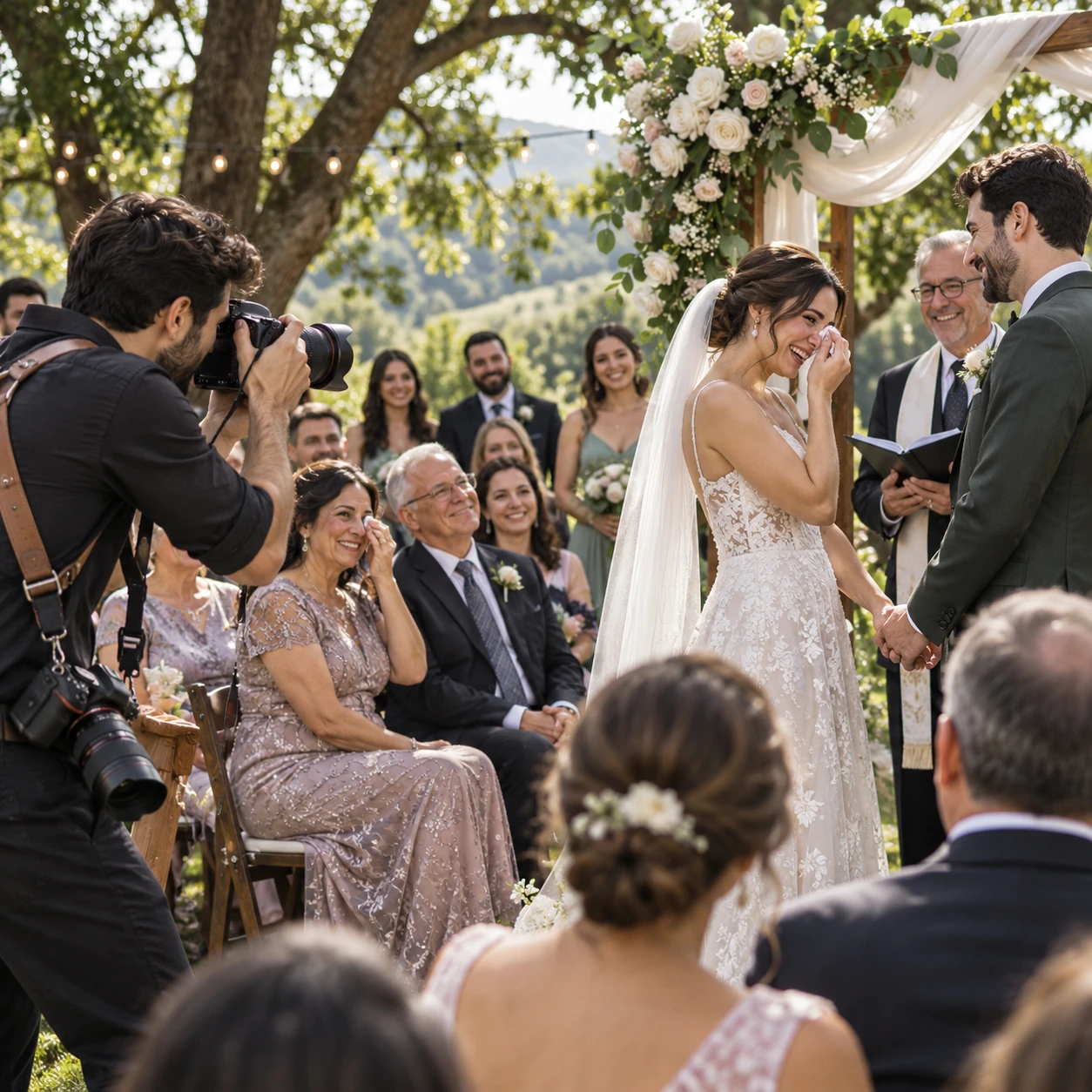
Unobtrusive coverage helps a photographer capture candid moments while letting the ceremony and reception continue naturally. Agree on how the photographer will move through the space, then encourage guests to be present rather than compete for the same view.
Before the ceremony, let the photographer know about any restrictions from the officiant or venue. During the vows, guests can keep phones and tablets lowered, avoid stepping into aisles, and silence notifications. An open view helps the couple stay connected to the moment and prevents a row of screens from appearing in the professional images.
At the reception, guests may want to take their own pictures. Set expectations kindly: invite them to photograph during open dancing or casual moments, while leaving key events such as the processional, vows, and first dance clear for the photographer. A brief note in the program or a welcome announcement can communicate this without turning the day into a strict phone-free event.
Couples can also help candid photos by staying engaged with each other and their guests. You do not need to perform for the camera. The laughter during a toast or a hug after the ceremony is often more meaningful when it happens without interruption.
Prepare for the unexpected
Prepare for weather, delays, and venue changes by agreeing on backup options with your photographer and wedding planner. A practical Plan B protects the most important coverage without requiring the day to run exactly on schedule.
For outdoor weddings, identify an indoor portrait location and a covered ceremony option, if available. Ask who will make the call if rain or strong wind changes the plan, and by what time the decision needs to be made. If the weather shifts after portraits begin, your photographer can suggest adjustments based on the actual conditions and available spaces.
Build small buffers into travel and transitions, and decide which photos can be shortened if the schedule slips. Usually, the couple and photographer can preserve essential family groupings and key ceremony coverage while trimming optional portraits or detail setups. Make those priorities clear in advance rather than deciding under pressure.
Avoid relying on a guest’s phone as the backup for professional coverage. Guests can share personal snapshots, but they may miss important moments, face access restrictions, or lack the time and preparation needed to document the whole day. Confirm practical backup arrangements directly with your photographer.
Coordinate with your photographer and wedding planner
Clear coordination between the couple, wedding photographer, and planner helps the schedule, shot list, and venue logistics work together. Share one current plan and make sure everyone knows who to contact if timing or access changes.
Before the wedding, provide the photographer with the final timeline, ceremony and reception addresses, travel details, family portrait groupings, and names of key contacts. Flag special requests such as a surprise performance, a private tradition, a mobility consideration, or a moment that should not be photographed. Confirm where the photographer can stand and whether the venue has restrictions.
The planner can manage transitions and gather people; the photographer can focus on documenting them. If one person is expected to do both jobs, clarify responsibilities so neither family portraits nor schedule changes are left unattended. A short final check-in a few days before the wedding can catch updated start times, weather plans, and changes in family availability.
Keep communication practical and concise. The more clearly your team understands what matters, the less time you will spend managing photography on the wedding day—and the more attention you can give to the people around you.